April is often recognised as Autism Acceptance Month, a time when workplaces, schools and communities acknowledge Autism – sometimes through blue awareness campaigns and puzzle piece imagery.
While these efforts are usually well-intentioned, many people within the Autistic community experience awareness campaigns, puzzle pieces and “light it up blue” messaging quite differently. For some, these symbols can feel uncomfortable or even offensive.
When Autism is framed primarily through awareness campaigns and puzzle imagery, it can unintentionally reinforce the idea that Autism is a puzzling condition to solve or fix. In contrast, many Autistic people understand Autism as a different neurotype – a community of people whose voices, experiences and contributions deserve to be recognised and valued.
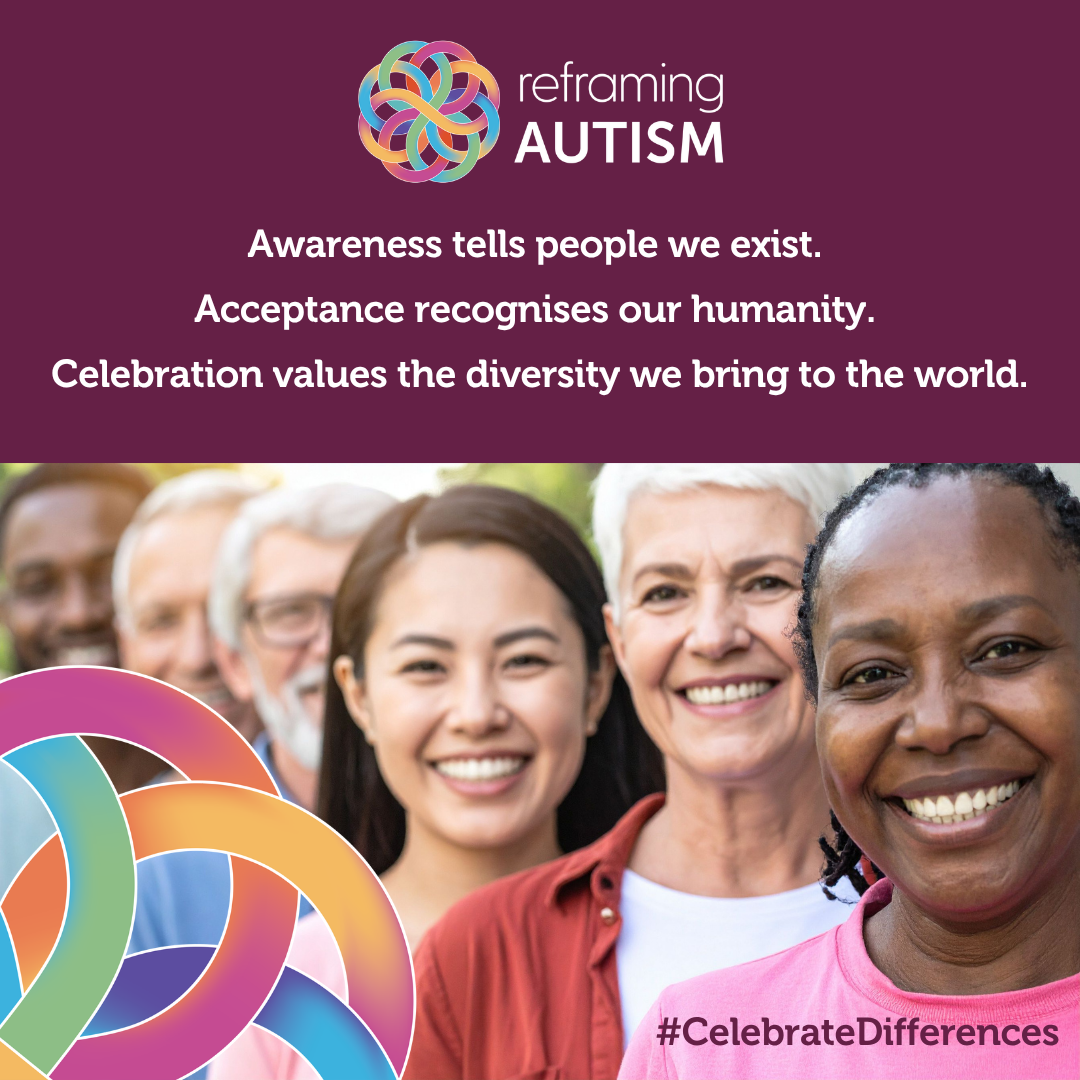
There has been an important shift in recent years from Autism awareness toward Autism acceptance, recognising that Autistic people deserve understanding, inclusion and respect. But we believe the conversation can go one step further.
We call for celebration – recognising the insight, creativity, honesty, passion and different ways of thinking that Autistic people bring to our families, communities and workplaces.
Celebrating Autistic people does not mean ignoring the challenges that many Autistic people and their families experience. Being Autistic in today’s world can involve real barriers, disability and support needs. Both realities can exist at the same time: we can acknowledge these challenges while also recognising and valuing Autistic lives and contributions.
If your workplace, school, community or family would like to celebrate Autism Acceptance Month respectfully and joyfully, we have some ideas for educators, professionals, workplaces, and parents and carers, to genuinely support and celebrate our neurotype.
Put the puzzle pieces back in the box, and embrace the gold infinity symbol, adopted by the Autistic community in 2005 as representative of the diversity and limitless potential of Autistic people when our differences are accepted and supported. A gold infinity symbol is widely embraced as meaningful, as the chemical symbol for gold is Au, while using a red colour palette, is a respectful counter message to the historical ‘Light it Up Blue’ messaging popularised by organisations that frame Autism primarily as a tragedy affecting families. For many Autistic people, the blue branding also reinforces stereotypes that Autism is primarily a condition affecting boys, despite the diversity of Autistic people across genders.
Consider using this editable Canva poster with respectful imagery and messaging.
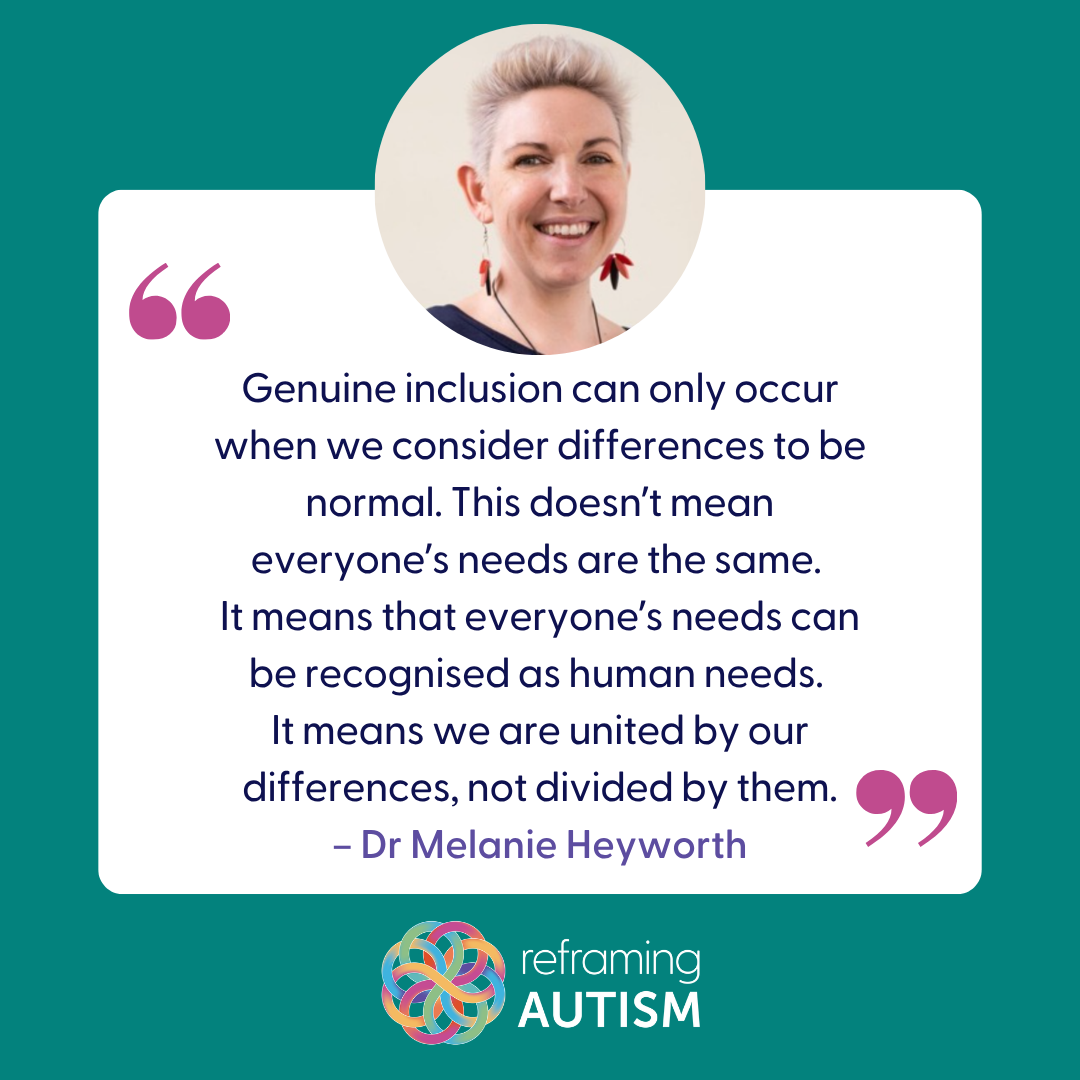
Our ‘Manifesto for Allies Adopting an Acceptance Approach to Autism’ is written by Reframing Autism Founder and Head of Research, Dr Melanie Heyworth, and outlines what meaningful allyship with the Autistic community looks like and how we can move beyond awareness toward acceptance and inclusion.
Educators
Share it with teaching staff or include it in professional development conversations about neurodiversity-affirming classrooms.
Allied Health Professionals
Reflect on how the manifesto’s principles could shape your practice and share it with colleagues.
Workplaces
Circulate the manifesto internally to spark conversations about accessibility and neurodiversity inclusion.
Parents and Carers
Read the manifesto to better understand the values and perspectives of the Autistic community.
Consider whether your workplace, classroom, therapy practice or home is accessible in areas such as:
Educators
Find practical strategies for supporting Autistic students and creating neurodiversity-affirming classrooms in our ‘Teaching Autistic Students: An Educators Guide’.
Allied Health Professionals
Explore ways to provide respectful, neurodiversity-affirming support and adapt clinical environments and practices in this guide:
Workplaces
Learn about practical workplace adjustments and inclusion strategies that help Autistic employees thrive:
Parents and Carers
Can find practical guidance on supporting their Autistic child at home and in everyday life here:
Educators
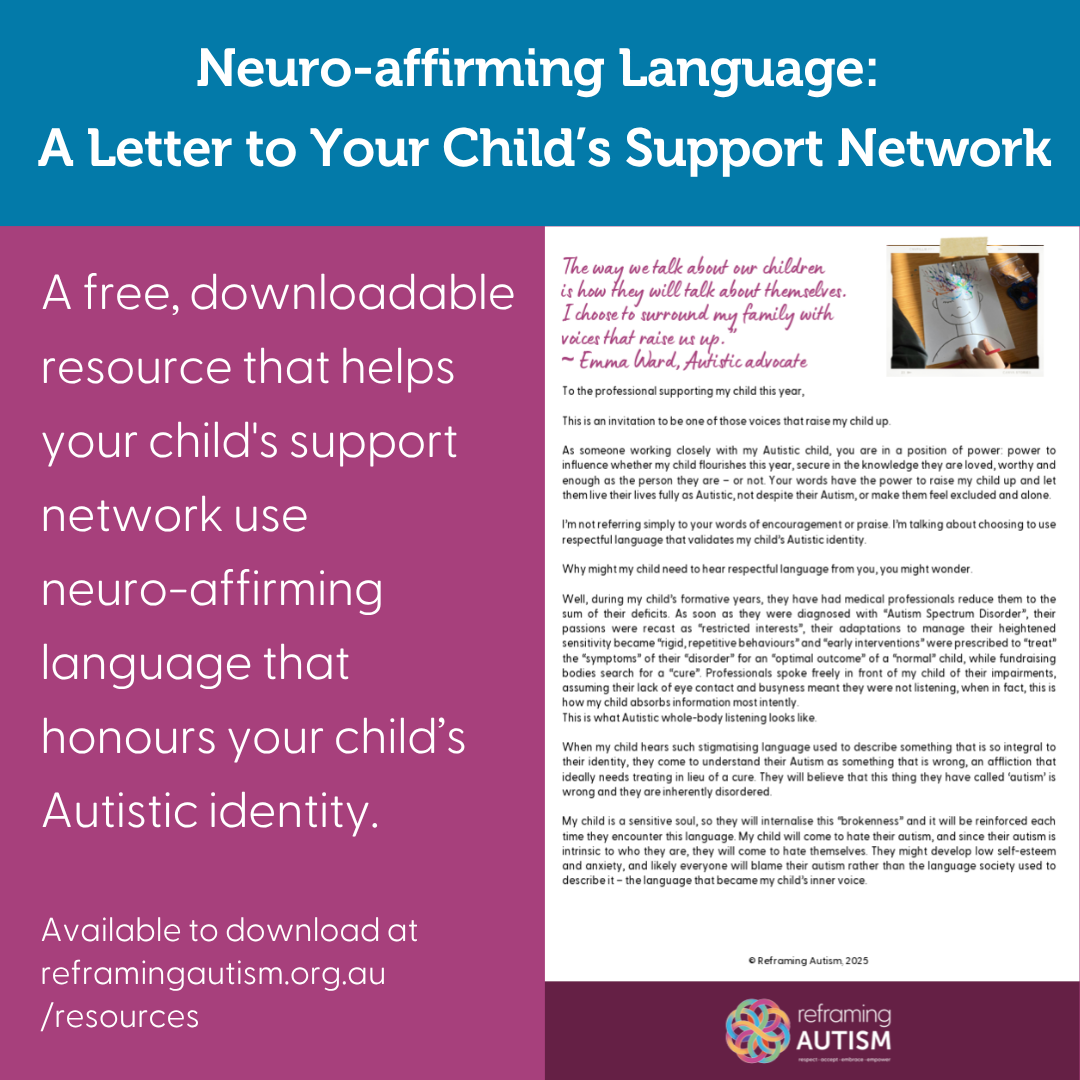
Use our children’s letter to inform conversations about neurodiversity and respectful language in the classroom and when talking to parents of Autistic children.
Parents and Carers
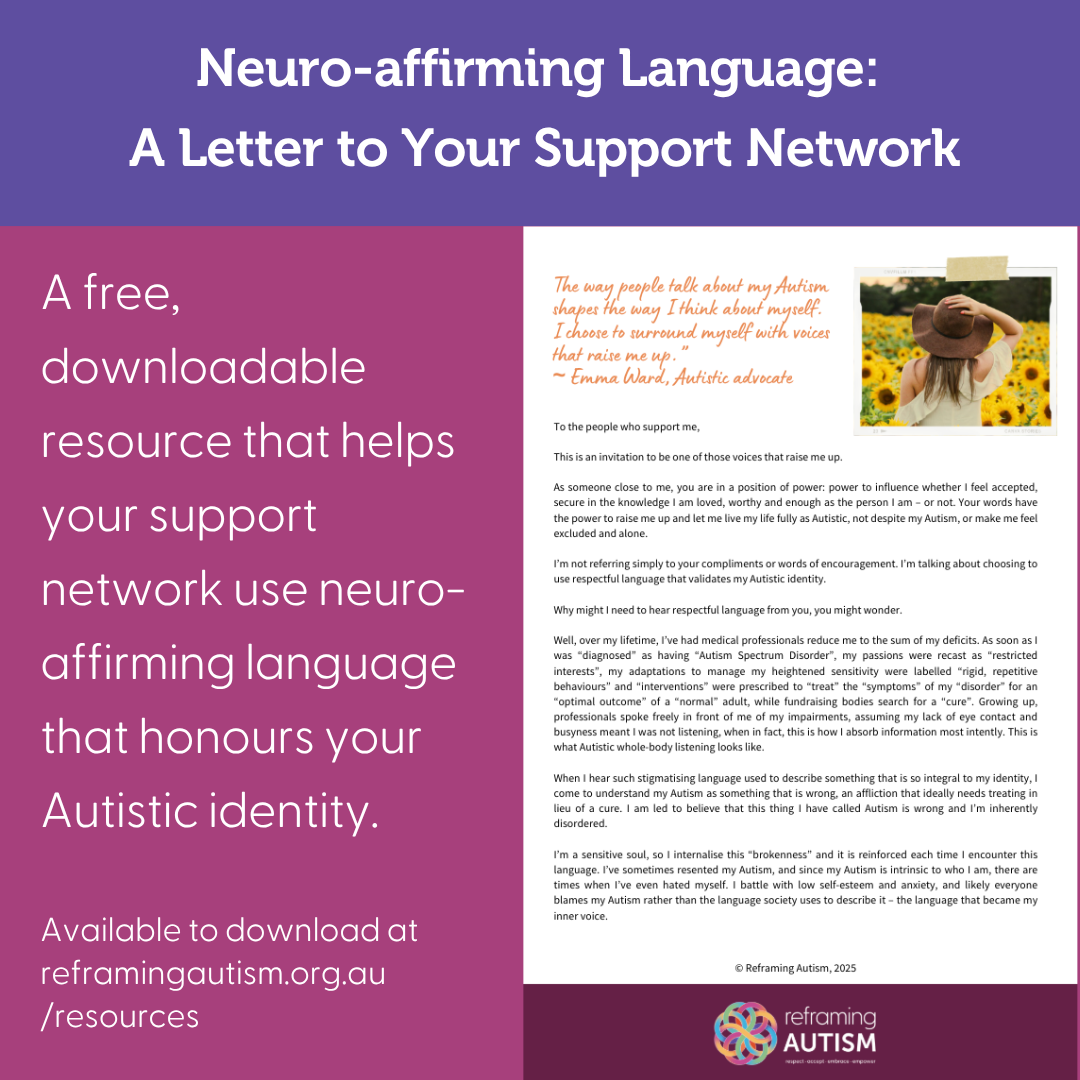
Share a letter with family members or friends who want to better understand respectful language.
Allied Health Professionals
Read these letters and share them with colleagues or families you support to encourage consistent, respectful language.
Workplaces
Include the resource in internal newsletters or diversity and inclusion initiatives.
Another meaningful way to celebrate Autism Acceptance Month is by supporting organisations led by Autistic people, who employ Autistic people and advocate for inclusion and rights.
Workplaces may like to consider choosing Autistic-led organisations as the beneficiaries of an April charity drive or workplace giving to make a meaningful improvement to the lives of Autistic Australians across the lifespan.
When we move beyond awareness toward acceptance, inclusion and pride, we create environments where Autistic people can truly belong.
The Australian Government’s National Autism Strategy aims to improve outcomes for Autistic people, families, and communities. We are working in partnership to develop an Evidence and Evaluation Framework to measure the Strategy’s progress and impact.
We’re now in the consultation stage and inviting Autistic people and those who support them to share their perspectives via:
• Focus groups
• One-to-one conversations
• A 30-minute survey
To get this right, we need to hear directly from those most impacted.
WHAT WE WANT TO KNOW
• What outcomes should be measured
• What real success looks like
• What matters most to Autistic people, families, and carers
WHO CAN TAKE PART?
People living in Australia who are:
• 18 years or older
• Autistic (no formal diagnosis required), or
• Supporting Autistic people as a carer
HOW TO GET INVOLVED
Direct consultation (limited spots):
Share your lived experience through an interview or focus group (April–May and June–July rounds). Participants receive a gift card. Participation is voluntary and support needs will be accommodated.
Or contact: engagement@reframingautism.
Prefer a survey? There is one week left to complete the 30-minute anonymous survey (closes 9 April)



The Reframing Autism team would like to acknowledge the Traditional Owners of the lands on which we have the privilege to learn, work, and grow. Whilst we gather on many different parts of this Country, the RA team walk on the land of the Awabakal, Birpai, Whadjak, and Wiradjuri peoples.
We are committed to honouring the rich culture of the Aboriginal and Torres Strait Islander peoples of this Country, and the diversity and learning opportunities with which they provide us. We extend our gratitude and respect to all Aboriginal and Torres Strait Islander peoples, and to all Elders past and present, for their wisdom, their resilience, and for helping this Country to heal.


 Donate