Newsletter 15 January 2025: Autistic and Embracing Adventure: Research, Resources and Lived Experiences of Travel

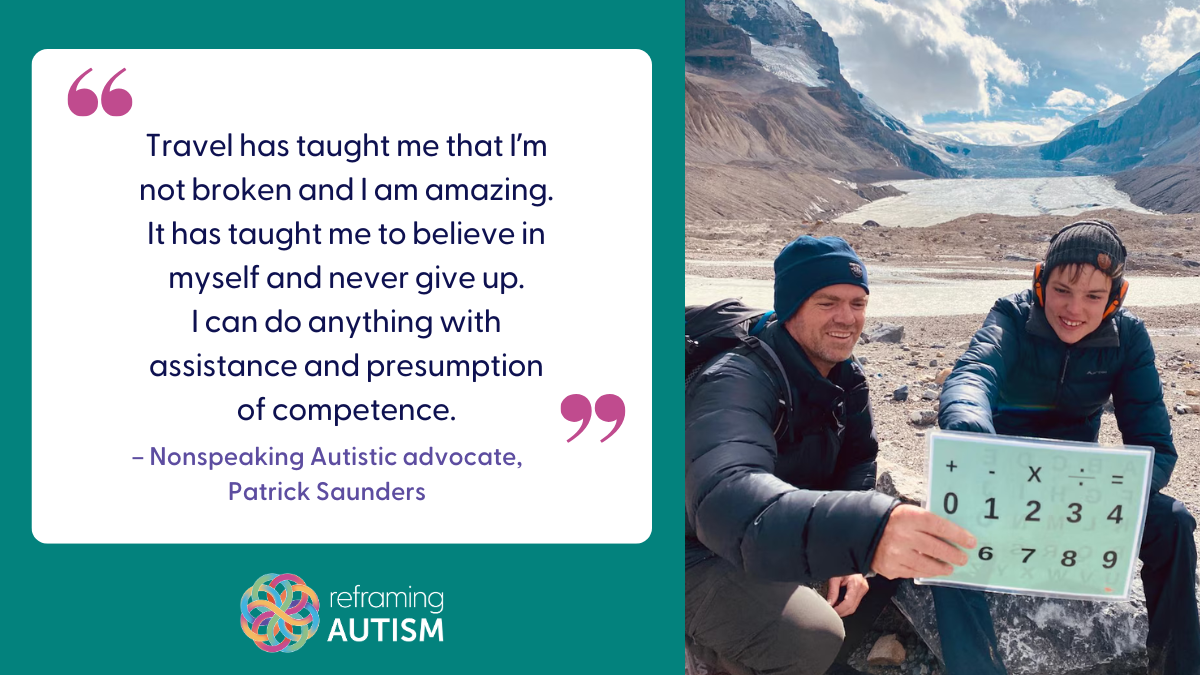
A photo of Autistic non-speaking advocate Patrick Saunders atop a mountain spelling with his regulation partner who is holding up his letterboard. Next to it is a quote which says: "Travel has taught me that I'm not broken and l am amazing.

For many of us, the world feels particularly loud and uncertain right now. News cycles, global events, and changing policies and processes can leave our nervous systems stretched thin — especially for those of us who already navigate a world that isn’t always designed with us in mind. In times like these, it’s natural to long for a change of scenery: not as an escape from reality, but as a way to regulate, reconnect, and find moments of calm, joy, or predictability. 

In our first newsletter for 2026, we share Autistic-led perspectives on travel — including reflections from a non-speaking Autistic advocate, emerging research on inclusive travel environments, and practical, lived-experience tips from our team to support safer, more predictable journeys. 

Ready for Anything: Planning Adventures with Autistic Loved Ones 

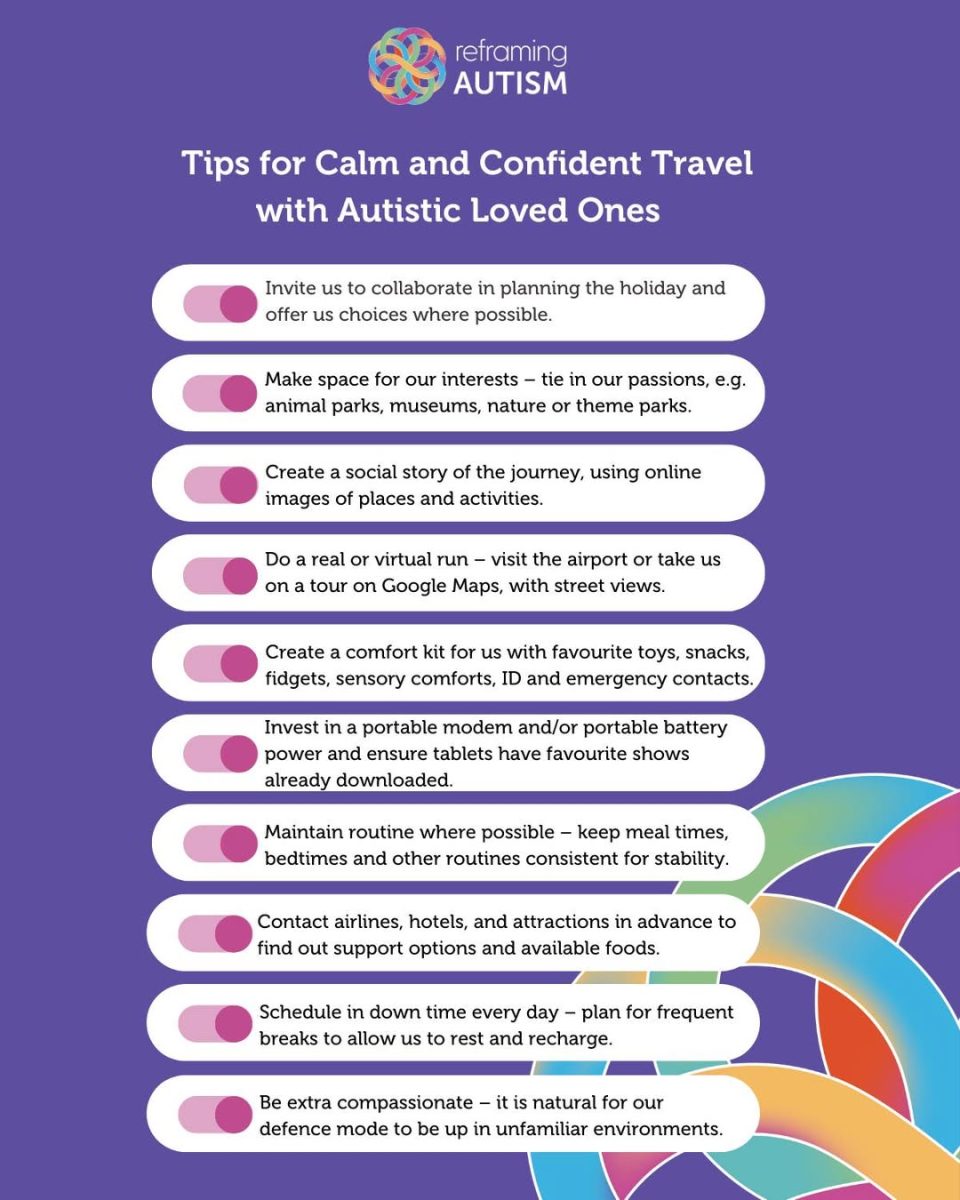
Autistic individuals can be excellent planners! In this resource, we share a preparation and packing list for before you leave, based on our team members’ lived experience as Autistic travellers and parents taking Autistic children on holiday. 
 Read the article 

Against a purple background with Reframing Autism logo at the top, is an infographic titled 'Tips for Calm and Confident Travel with Autistic Loved Ones' Beneath are white text boxes with 10 bulleted tips. They state: 'Invite us to collaborate in planning the holiday and offer us choices where possible. Make space for our interests – tie in our passions, e.g. animal parks, museums, nature or theme parks. Create a social story of the journey, using online images of places and activities. Do a real or virtual run – visit the airport or take us on a tour on Google Maps, with street views. Create a comfort kit for us with favourite toys, snacks, fidgets, sensory comforts, ID and emergency contacts. Invest in a portable modem and/or portable battery power and ensure tablets have favourite shows already downloaded. Maintain routine where possible – keep meal times, bedtimes and other routines consistent for stability. Contact airlines, hotels, and attractions in advance to find out support options and available foods. Schedule in down time every day – plan for frequent breaks to allow us to rest and recharge. Be extra compassionate – it is natural for our defence mode to be up in unfamiliar environments.


Insights from Non-Speaking Autistic Advocate Patrick Saunders 

In this video, non-speaking Autistic advocate Patrick Saunders shares his reflections on travel — and how curiosity, care, and understanding can transform the experience and open up new worlds. 
Travelling with Curiosity, Care and Confidence: Insights from Non-Speaking Autistic Advocate, Patrick Saunders

Watch the video 


 Travel research we love 

We’re excited to highlight new, inclusive travel research led by Dr Chris Edwards and Dr Abbey Love from the Aspect Research Centre for Autism Practice (ARCAP). Their study explored Autistic experiences of airport travel and identified several recurring themes shaping whether travel feels accessible or overwhelming. These included:  

  • sensory load; 
  • uncertainty and lack of clear information; 
  • time pressure and transitions; 
  • communication barriers with staff; and  
  • the emotional labour required to self-advocate in environments not designed for Autistic needs.  

Importantly, the research also highlighted protective factors – including predictability, compassionate staff interactions, quiet spaces, and clear visual information – offering practical, evidence-based recommendations for creating airport environments that better support Autistic travellers and their families. 

Read the research 


On Demand Webinar: Supporting Transitions for Autistic Children 

Big journeys often begin with small steps. Whether your Autistic child is preparing for travel, moving schools, moving classes, or adjusting to a new home or family structure, this on-demand webinar offers practical tools to help you support those transitions with empathy and confidence. 

 Learn more 

As we navigate the months ahead together, we hope these resources help bring opportunities for growth, accomplishment and care in a world that doesn’t always feel enabling. 


Do you want to receive this information delivered straight to your inbox? If so, sign up here for our newsletter.

Share:

  • facebook
  • twitter
  • linkedin

Related resources

View all
Flag Group

Always was, always will be Aboriginal land.

The Reframing Autism team would like to acknowledge the Traditional Owners of the lands on which we have the privilege to learn, work, and grow. Whilst we gather on many different parts of this Country, the RA team walk on the land of the Awabakal, Birpai, Whadjak, and Wiradjuri peoples.

We are committed to honouring the rich culture of the Aboriginal and Torres Strait Islander peoples of this Country, and the diversity and learning opportunities with which they provide us. We extend our gratitude and respect to all Aboriginal and Torres Strait Islander peoples, and to all Elders past and present, for their wisdom, their resilience, and for helping this Country to heal.

Join us on the journey to reframe how society understands Autism