Written by Jac Lai
Note: This article is for information purposes only and does not replace professional medical advice. If you’re concerned about your own or your child’s menstrual health, please speak to your GP or another trusted healthcare professional.
Content warning: self harm, pain
Fourteen years old and such heavy periods that leaked through to my outer clothing. The worst part was not being able to feel okay about it – the hiding, the running into the bathroom. And I am far from alone in my experience.
Periods can be distressing for Autistic individuals, because they are messy, painful and unpredictable. Many Autistic people also experience changes in sensory processing, emotions, executive functioning, communication and energy levels around their menstrual cycle. Understanding these changes can make it easier to plan ahead, reduce self-blame and recognise when additional support may be needed. Whether you’re learning about your own body or supporting someone else’s, I hope these practical tips make the journey feel a little less overwhelming.
You’re not alone. Your Autistic female allies are waiting – they will be the ones you vent to, and they will truly understand!
I was overwhelmed with experiences that took place from my first period to surgery I had a few years ago to reduce my symptoms, to still having to deal with symptoms at 40 year’s old. Being an Autistic individual also adds additional layers of difficulty when managing extreme fatigue, maintaining cleanliness and trying to keep up with other demands in life.
Whether you’re learning about your own body or helping a young person understand theirs, getting to know how autism and menstruation interact is incredibly important. This knowledge can help build confidence, support self-advocacy, develop autonomy and build choice and control.
Whether you’re preparing for your own first period or supporting someone else’s, normalise the conversation. Be honest, realistic and explain what to expect. Understanding that periods are a normal part of growing up – and why they happen – can make them far less frightening. Visual supports, social stories, videos and practising with period products beforehand can also reduce anxiety.
Learning to care for your body during your period is an important part of staying healthy. Parents can help establish routines before they’re needed. Set phone alerts to change pads, tampons or period cups regularly, wash as needed and carry wipes or spare products if they help you feel comfortable. Avoid scented soaps or vaginal washes – the vagina is self-cleaning, and warm water on the outside of the body is all that’s usually needed.
Consider how your or your child’s sensory profile may influence which menstrual products feel most comfortable, and include them in the discussion. There are so many options now, and a lot of them consider sensory processing differences. Do they have an acute sense of smell in which case, capturing the blood internally with a menstrual cup or tampon may be a better choice? Do they find bodily functions distressing, in which case black period undies may be less confronting than white sanitary items? Is there a sensitivity to wetness that a menstrual cup, disc or tampon might avoid?
It is also okay if your or your child’s preferred period product changes over time. Many people experiment with different products before finding what feels most comfortable.
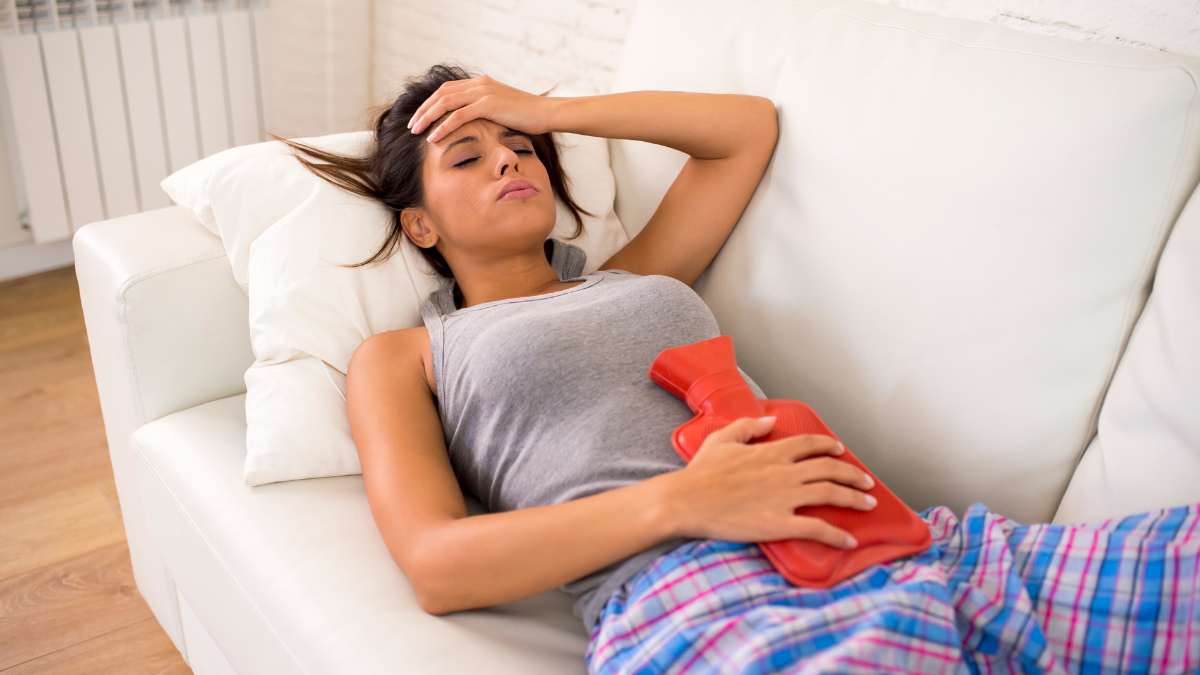
There will be pain and cramping. Some people have little, others have too much that at times it may seem too hard to handle (hence me burning myself). Your body will adjust, and each presentation is unique, just like being Autistic. Explore safe strategies such as heat packs, pain relief recommended by your healthcare professional, gentle movement or rest, and remember that parents can help by validating pain and recognising patterns.
Autistic people may also experience pain differently because of differences in nociception (how the body processes pain) and interoception (how we notice signals from inside our body). Understanding these differences can help you recognise patterns and advocate for support.
If pain regularly stops everyday activities or doesn’t improve with simple pain relief, speak with your GP. Conditions such as endometriosis, polycystic ovary syndrome (PCOS) or adenomyosis should not be overlooked.
Periods can also affect appetite, sleep, concentration, mood, fatigue, digestion, headaches, acne and emotional regulation. Young people may need extra rest, flexibility or understanding during this time, while parents can help by recognising patterns and adjusting expectations where possible. Planning lighter workloads or scheduling additional downtime where possible can help conserve energy during particularly difficult days.
Using a paper planner or Calendar app to track your or your young person’s period can aid in being organised, knowing when fatigue and pain will hit so you can pre-plan for work/study/social demands, recognising changes, reporting changes to a healthcare provider, and identifying a pattern for your average cycle. This information is useful.
It’s common to worry about getting your period unexpectedly while at school, work or out in the community. Carrying a small period kit with spare underwear, period products, wipes, pain relief (if appropriate), and a sealable bag for soiled clothing can provide reassurance. If you are supporting a young person, it can also help to identify trusted adults they can speak to if they need assistance.
If periods feel overwhelming, you’re not alone. Speak with your GP or another trusted healthcare professional if periods are very heavy, unusually painful, last longer than a week, change suddenly, or are affecting school, work or everyday life. Autistic people are also more likely to experience Premenstrual Dysphoric Disorder (PMDD), so seek advice if you notice severe mood changes, anxiety, depression or irritability before your period. Conditions such as endometriosis, adenomyosis, PCOS, bleeding disorders and iron deficiency can all be treated once recognised.
Written by Autistic author Robyn Steward, this practical guide is designed for young people aged 9 to 16. It explains what periods are, what to expect, how to manage common challenges, and offers clear, step-by-step advice in a visual format.
Written by Autistic advocate Siena Castellon, this neuro-affirming guide supports Autistic girls through puberty, friendships, school, self-advocacy and growing up. It includes practical strategies for navigating menstruation alongside the many other changes that adolescence brings.
In this lived-experience blog, Autistic writer Emily shares her personal experiences of menstruation, discussing the sensory, emotional and practical challenges that periods can bring, along with strategies that have helped her better understand and support herself.
This scoping review found growing evidence that menstruation can significantly affect the mental health and wellbeing of Autistic people. Across the available studies, menstruation was associated with increased anxiety, depression, emotional dysregulation, sensory sensitivities and executive functioning challenges for many participants. The authors also identified major gaps in research and clinical care, concluding that Autistic people need better access to evidence-based menstrual education, healthcare and support that recognises the unique ways autism and menstruation can interact.
Read the study: https://www.frontiersin.org/journals/global-womens-health/articles/10.3389/fgwh.2025.1531934/full
This systematic review brought together 12 studies exploring Autistic experiences of menstruation. It found that periods can have significant physical, emotional and social impacts, with many Autistic people reporting increased sensory sensitivities, anxiety, burnout and executive functioning challenges during menstruation. Importantly, the review also found that Autistic people’s priorities – such as receiving practical education before their first period and understanding their own experiences – often differed from those of parents and professionals, who tended to focus more on hygiene and independence. The authors concluded that menstrual support should be tailored to Autistic people’s needs and informed by research that centres Autistic voices.
Read the study: https://journals.sagepub.com/doi/abs/10.1089/aut.2024.0307
This co-produced study explored the experiences of 123 Autistic people who menstruate and found that many reported their periods amplified existing Autistic experiences, including sensory sensitivities, executive functioning difficulties, emotional regulation challenges and anxiety. Participants also emphasised the importance of honest, practical education before a first period, understanding what is “normal” for their own body, and having accessible, step-by-step guidance on managing periods.
Read the study: https://www.ncbi.nlm.nih.gov/books/NBK565649/
Jac is a proud, female AuDHDer, supporting her fellow community to thrive. She runs her own neurodivergent tutoring business, based in Brisbane, that supports youth to succeed in their educational journey. In her spare time, Jac is cuddling up with her family, fur baby Bruno and crafting or building Lego. Email Jac at directorauthenticallyautistic@gmail.com.



The Reframing Autism team would like to acknowledge the Traditional Owners of the lands on which we have the privilege to learn, work, and grow. Whilst we gather on many different parts of this Country, the RA team walk on the land of the Awabakal, Birpai, Whadjak, and Wiradjuri peoples.
We are committed to honouring the rich culture of the Aboriginal and Torres Strait Islander peoples of this Country, and the diversity and learning opportunities with which they provide us. We extend our gratitude and respect to all Aboriginal and Torres Strait Islander peoples, and to all Elders past and present, for their wisdom, their resilience, and for helping this Country to heal.

 Donate