Written by a Reframing Autism team member
Yes, I’ve heard an empathic response should sound like: “That must have felt really embarrassing. Don’t worry, I’m sure no one noticed.”
But if a friend tells me an embarrassing story, I’m much more likely to respond with something like: “I once soiled myself so spectacularly in Pilates that the studio had to close for deep cleaning.”
And, strangely enough, offering up that disgusting picture for their mind’s eye is my way of showing them I care.
I’m not trying to outdo their story with an even better one. I’m not bored, waiting impatiently for an opportunity to turn the conversation back to myself. Quite the opposite.
I’m telling them: “I know that feeling. I’ve been mortified too. Here’s one of my most humiliating moments so you know you’re safe telling me yours.”
I’m telling them a SAME Story.
Autistic neuroscience and trauma researcher Janae Smith uses the term ‘SAME Stories’ to describe an Autistic social skill that many of us will recognise: responding to someone else’s experience by sharing a similar experience from our own lives.
You tell me a story. I search my own experiences for something that feels like yours, and I offer it back.
You tell me that a friend excluded you from something; I tell you about the time my friends left me out. You tell me that you embarrassed yourself at work; I tell you about the hideous thing I once said in a meeting.
I’m not trying to make your story about me. I’m letting you know, you’re not alone.
Of course, get two enthusiastic SAME storytellers together and the whole thing can start to resemble a game of ‘Oversharing Chicken’ in a white-knuckle race to the gutter.
“That happened to me!”
“Oh my God, SAME, except mine happened while …”
And suddenly we’ve gone from a mildly embarrassing interaction at the supermarket to someone’s childhood trauma in six conversational moves, and nobody is entirely sure how we got there.
But even that slightly chaotic exchange can have something lovely at its heart: the growing realisation that you can tell this person the weirdest, most embarrassing, most complicated thing and, rather than recoiling, they’re probably going to rummage around in their own flotsam of weird, embarrassing, messy things and offer you one back – like a stray cat proudly dropping a rotting mouse corpse at your feet.
There can be enormous solidarity in that.
One of my children will come to me with a friendship problem. Someone left them out. Someone behaved in a way they can’t quite make sense of.
And I’ve discovered that one of the most powerful things I can give them is a SAME Story.
I tell them about being their age and having my friends suddenly behave differently towards me. About a misunderstanding I had at school, or the time I thought someone didn’t like me, or the awful feeling of discovering that people had done something without me.
They soften. Because suddenly this enormous, confusing thing that has happened to them is not unprecedented.
Their mother was once twelve. Their mother was left out. And their mother eventually found people who knew she was worthy of friendship.
A SAME Story doesn’t necessarily solve my child’s problem. But it does tell them: Other people you love and respect, and who are worthy of friendship have been here before.
We’re taking something from our own lives – sometimes painful, sometimes embarrassing, sometimes so mortifying that it really should have remained buried – and placing it alongside someone else’s. Here. I’ve got one too.
Sometimes “I understand” sounds like, “That must have been awful.” And sometimes it sounds like:


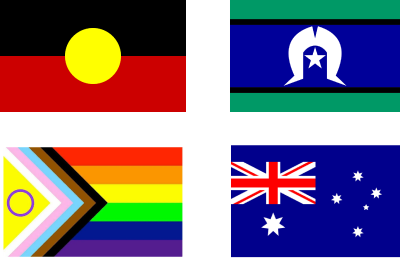
The Reframing Autism team would like to acknowledge the Traditional Owners of the lands on which we have the privilege to learn, work, and grow. Whilst we gather on many different parts of this Country, the RA team walk on the land of the Awabakal, Birpai, Whadjak, and Wiradjuri peoples.
We are committed to honouring the rich culture of the Aboriginal and Torres Strait Islander peoples of this Country, and the diversity and learning opportunities with which they provide us. We extend our gratitude and respect to all Aboriginal and Torres Strait Islander peoples, and to all Elders past and present, for their wisdom, their resilience, and for helping this Country to heal.


 Donate