By encouraging Autistic individuals to apply, valuing their lived experience, and designing a more accessible recruitment process, we’ve built a team that brings diverse perspectives, creative problem-solving and deep expertise to our workplace.
As our Autistic CEO, Sharon Fraser, told ABC News,
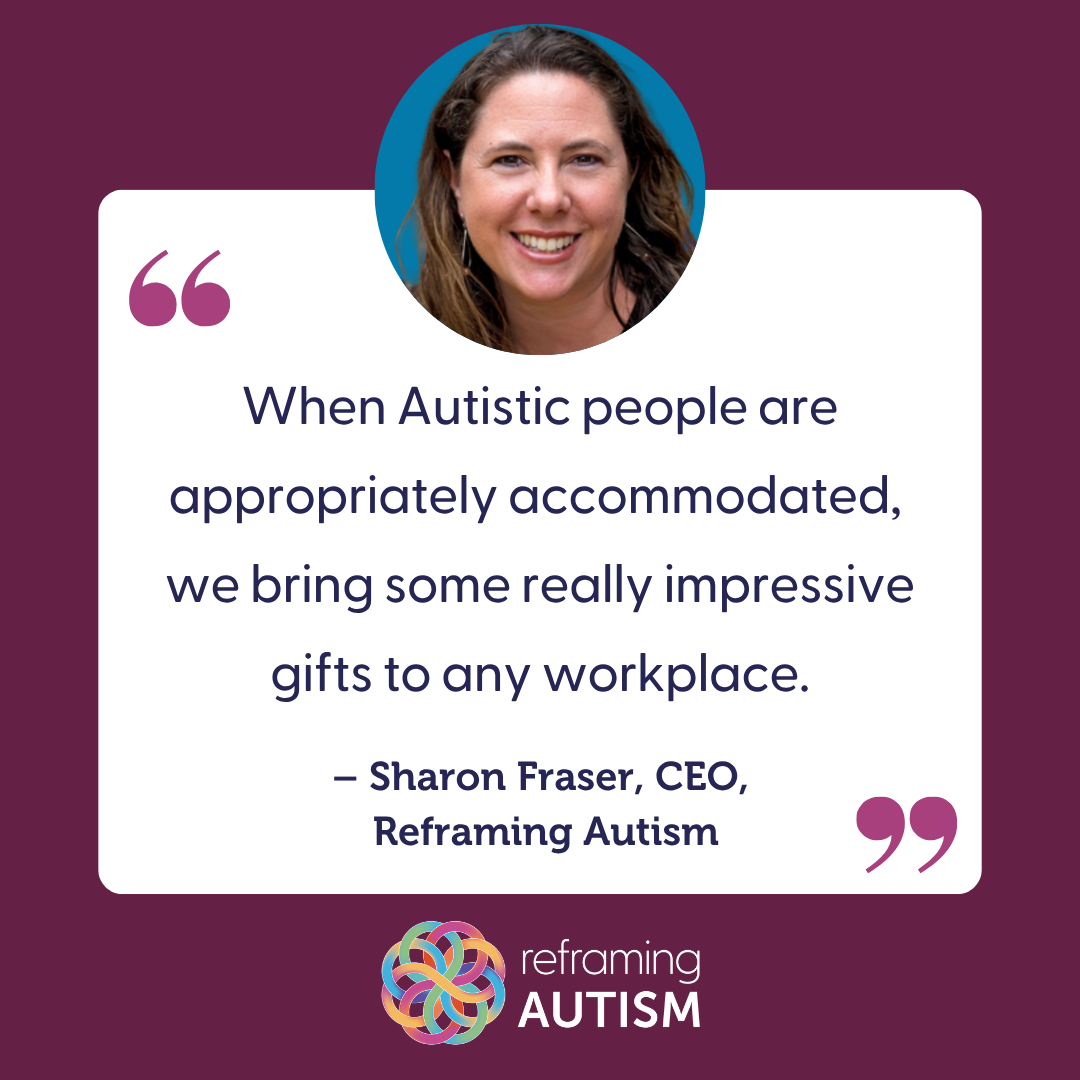
“Many organisations might see employing an Autistic person as charity work, and that’s just not the case. When Autistic people are appropriately accommodated, we bring some really impressive gifts to any workplace.”
Traditional recruitment processes often assess how well a person performs in an interview, rather than how well they can perform the role itself. These conventional hiring practices unintentionally disadvantage Autistic candidates by relying on neuronormative social expectations, ambiguity, time pressure, and unspoken rules that have little relevance to workplace capability.
There is no single recruitment process that will meet every Autistic person’s needs. Autistic people have diverse experiences and strengths, so accessibility should be approached with flexibility and a willingness to make reasonable adjustments where required. The principles and practices outlined below reflect our perspective on best practice and continue to evolve as we learn from our community, our own lived experiences, and emerging evidence.
Accessibility begins long before the interview process. It begins with designing the role in a way that removes unnecessary barriers. Where possible:
Many barriers arise before an Autistic candidate even applies. Candidates should not have to work hard to understand a job advertisement or decipher what an employer is really looking for. Clear communication helps everyone, so aim to:
Clear communication reduces cognitive load and supports informed decision-making – which ultimately contributes to an efficient workplace.
Reducing uncertainty is one of the most effective ways to truly see what Autistic candidates are capable of. In order to do this, aim to:
Research tells us that barriers to Autistic employment arise not from individual differences, but from recruitment systems that prioritise conventional interview performance over genuine workplace capability (Vincent et al., 2024). So, try to conduct interviews in a way that measures capability – not social performance. To do this, where possible:
Where feedback to unsuccessful candidates is provided, it should focus on the evidence demonstrated against the published role requirements, rather than subjective impressions such as confidence, communication style, personality, perceived “cultural fit” or other characteristics unrelated to successful performance in the role. The goal is to provide feedback that is respectful and genuinely useful to candidates.
Receiving feedback can be used as a valuable learning opportunity for the recruiting organisation. By inviting candidates to provide feedback on the accessibility and equitability of the recruitment process, organisations can improve their processes. Neuro-affirming recruitment is inherently iterative. Embedding candidate feedback into ongoing evaluation ensures that recruitment processes are informed by candidates’ lived experiences.
These practices have enabled us to build a highly skilled Autistic workforce and continue to learn from our recruitment experiences.
Research led by Autistic participants demonstrates that Autistic employees bring a wide range of strengths to the workplace – including sustained attention to detail, creativity, problem-solving, honesty, dedication, organisational skills and unique perspectives (Cope & Remington, 2022). We certainly see this in our workplace.
In our experience, recruitment processes that are clear, predictable, structured, and accessible enable organisations to make better-informed hiring decisions while creating a fairer experience for candidates.
Cope, R., & Remington, A. (2022). The Strengths and Abilities of Autistic People in the Workplace. Autism in Adulthood, 4(1), 22–31. https://doi.org/10.1089/aut.2021.0037
Vincent, J., Harkry, L., & Hamilton, L. G. (2024). Creating a diversity climate in the workplace: A mixed methods study into knowledge of autism and attitudes toward hiring autistic people in the United Kingdom. Journal of Vocational Rehabilitation, 61(2), 303–314. https://doi.org/10.3233/JVR-240039
This presentation delves into the unique strengths and benefits that neurodivergent individuals bring to the workplace and addresses the challenges that they may face – from sensory sensitivities to social misunderstandings – and how these can impact their success in a traditional environment. Most importantly, the presentation provides practical strategies and best practices for employers who want to foster a more inclusive environment for their teams.



The Reframing Autism team would like to acknowledge the Traditional Owners of the lands on which we have the privilege to learn, work, and grow. Whilst we gather on many different parts of this Country, the RA team walk on the land of the Awabakal, Birpai, Whadjak, and Wiradjuri peoples.
We are committed to honouring the rich culture of the Aboriginal and Torres Strait Islander peoples of this Country, and the diversity and learning opportunities with which they provide us. We extend our gratitude and respect to all Aboriginal and Torres Strait Islander peoples, and to all Elders past and present, for their wisdom, their resilience, and for helping this Country to heal.


 Donate