Written by Kalli Anagnostopoulou
In our diagnostic manuals, autism is locked inside a sterile vocabulary of deficits-broken mirrors of communication, missing pieces of social reciprocity, and rigid, behavioural quirks. We treat the neurodivergent mind as a malfunctioning clock, desperately needing its gears aligned to neurotypical time. But as a clinician and researcher who walks daily through the quiet, internal landscapes of adult souls, I see an entirely different reality.
Autism is a terrifying, beautiful amplification of human nature.
In 2007, neuroscientists Kamila and Henry Markram introduced the Intense World Theory, suggesting that the core of autism is a hyper-reactive brain architecture. Neurologically, the Autistic brain possesses a denser, more hyper-connected matrix of microcircuits in the neocortex and the amygdala.
What does this mean for the lived human experience? It means that where a neurotypical mind possesses evolutionarily engineered filters – dimming the lights, muffling the background noise, and sanitising social subtext for easy consumption – the Autistic mind has no psychological skin. It experiences reality in its absolute, unfiltered purity.
This is the physics of an unfiltered soul. The Autistic individual does not suffer from an inability to connect; they suffer from a relentless, overwhelming torrent of connection.
A subtle, microscopic shift in a partner’s facial expression is not a passing social cue; it is an emotional shockwave processed by an over-activated nervous system. The hum of a fluorescent light is not background static; it is a violent, sensory intrusion.
Mainstream psychiatry routinely misdiagnoses them with clinical depression, medicating the symptom while missing the ecology of the trauma. Burnout is not a chemical imbalance of sadness. It is the physical, cellular exhaustion of a human being who has spent decades “masking” – forcing a highly sensitive, non-linear operating system to perform linear, neurotypical scripts just to survive the workday.
It is the soul collapsing under the weight of its own forced camouflage. It is the agonising, invisible grief of realising you have spent a lifetime punishing yourself for failing to be someone else.
When we observe an Autistic person hyper-focusing on a single topic – what the textbooks coldly call a “restricted interest” – we are not looking at a pathology. We are witnessing Monotropism, a magnificent cognitive strategy where the brain channels its entire processing energy into a single deep channel of attention. In those moments of hyper-focus, the division between the observer and the observed completely dissolves. It is a state of profound, meditative oneness. It is the very birthplace of human art, scientific revolution, and deep, unadulterated passion.
By forcing neurodivergent individuals to mute their intensity to look “palatable,” we are actively eroding the biological outliers of human sensitivity.
When an adult receives a diagnosis and the tears of relief inevitably fall, it is never because they have found a name for a disorder. It is because science has finally validated their humanity.
They realise they were never cold, or broken, or distant. They were simply carrying an ocean of unfiltered reality in a world that only built buckets.
If psychiatry is to evolve, it must move beyond the behaviourist trap of fixing what is inconvenient to society. We must stop trying to cure the intensity of the neurodivergent soul and instead learn to revere it.
For in a world rapidly flattening into algorithmic conformity, the Autistic mind remains a vital, beautiful, and terrifying reminder of what human consciousness looks like when it refuses to filter out the universe.
Kalli (Kalliopi) Anagnostopoulou is completing her PhD in Clinical Psychology at the University of Cyprus, where her research and clinical work focuses on autism and the lived experiences of neurodivergent adults, with a particular interest in masking, and the challenges of late diagnosis. She is deeply invested in contemporary diagnostic models and psychotherapeutic approaches that move beyond pathology – toward recognition, dignity, and genuine understanding. She works with individuals navigating the slow, courageous process of reclaiming identity in a world that rarely makes space for difference. She holds a MSc in Clinical Psychology from Leiden University, a BSc in Psychology from the University of Cyprus, and a BSc in Philosophy, Education, and Psychology from the University of Ioannina.


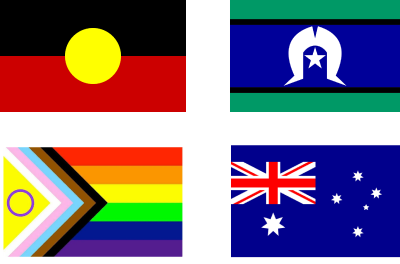
The Reframing Autism team would like to acknowledge the Traditional Owners of the lands on which we have the privilege to learn, work, and grow. Whilst we gather on many different parts of this Country, the RA team walk on the land of the Awabakal, Bidjigal, Birpai, Darumbal, Gadigal, Kaurna, Peramangk, Whadjuk, Wiradjuri and Wurundjeri Woi-wurrung peoples.
We are committed to honouring the rich culture of the Aboriginal and Torres Strait Islander peoples of this Country, and the diversity and learning opportunities with which they provide us. We extend our gratitude and respect to all Aboriginal and Torres Strait Islander peoples, and to all Elders past and present, for their wisdom, their resilience, and for helping this Country to heal.


 Donate